Tuesday, July 30, 2013

Release of Fledgling Song

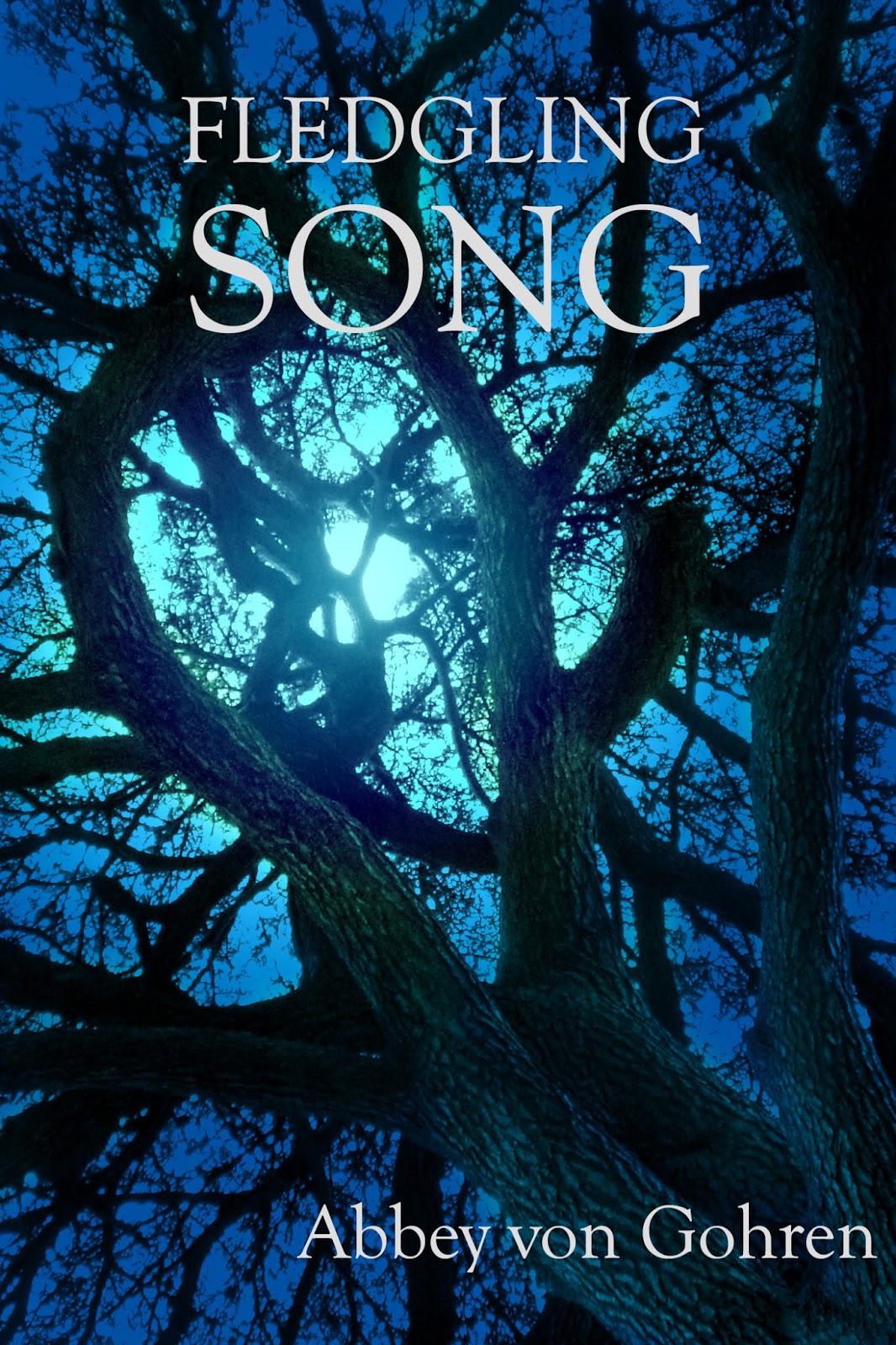
I am overjoyed to announce the official release of my novella, Fledgling Song (2013, Electio Publishing).


Fledgling Song traces the thought life and wanderings of Claire Sivert, a young Canadian woman living and studying biology in France. Caught between the wilderness landscapes of her native Manitoba and the winter-gray cityscapes of Paris, she struggles to find a firm footing. Besides yearning for a sense of place, she is also caught between two eras of her life. Painfully vivid memories from her childhood and tentative hopes rooted in the present intermingle as she moves through her days and records her musings in her faithful journal. Full of wonder and yet delicately unsure of herself, Claire learns through several encounters with new friends how to be bold and face her past and present, however imperfect.

A perfect end-of-summer read! 

Available at electiopublishing.com in paperback and ebook and amazon.com. 

Sunday, July 28, 2013

Let Us Name


It has been a longtime favorite thought of mine that poetic language is, by definition, naming things properly. I have alluded to this idea previously in conjunction with my own sense of calling on the Fling, and many other thinkers have dwelt on it and enriched my own understanding as well over the years. Adam's work as the first poet is implied, for example, in Bob Dylan's "Man Gave Names to All the Animals." The song ultimately demonstrates that our choice of words can have drastic implications. It begins with the typical Dylan, off-the-cuff whimsy:

He saw an animal up on a hill
Chewing up so much grass 'til she was filled
He saw milk comin' out but he didn't know how
"Aw, think I'll call it a cow"


However, the last stanza ends abruptly - and, more importantly, nameless.

He saw an animal as smooth as glass
Slithering his way through the grass
Saw him disappear by a tree near a lake...

We, after the fall, are left to finish the sadly obvious, the unsaid, the deadly. There has got to be some crucial relation between the thing itself and the thing we call it. If one is able to correctly use words (either spoken or written) to evoke and reflect an experience and it can be very good, then might improperly wielding words have the opposite effect? Or what are the consequences of simply failing to name correctly, as in Dylan's depiction of Adam, who retires in shamefaced silence? If only he had shouted "SNAKE!" to Eve in time...

At the end of last semester, I toiled through Ralph Waldo Emerson's essay "The Poet" in the faculty room with a few other teachers. I say it was hard work because he obviously had some Very Large Pronouncements to make, being Emerson, but the most tantalizing tidbits were deeply rooted in large sections of dense prose. Such as, "the poet is the Namer, or Language-maker, naming things sometimes after their appearance, sometimes after their essence, and giving to every one its own name and not another's, thereby rejoicing the intellect, which rejoices in detachment or boundary." Whew. I get it, but wow. (There were plenty I didn't.) Or, "language is the archives of history...language is fossil poetry." This is what sometimes happens when poets try to write literary theory - opacity and metaphors galore. But the fact that it is "rejoicing to the intellect" to delineate here but not there is a gorgeous and true thought. And the fact that we humans do this with our words is even more stunning. It reminds me of that stirring passage in Job where God is re-telling how he created the waters, when he informs them in no uncertain terms :"This far you may come and no further, here is where your proud waves halt." Who is this, that even the winds and the waves obey Him? And yet, if we are to have dominion as His children and heirs, do we not engage in a similar activity? We point at things, perhaps tremblingly, and say: "After this preposition, and before this noun - this is where your proud waves halt."


All of this has been fresh in my mind this past week as I ground my way through the arduous task of naming and re-naming my book. As it happens, "working" titles can be dangerous. You just might find yourself a week before the publication date thinking to yourself: Hm. That's not it at all.  I read today that Gone With the Wind was originally entitled Mules in Horses' Harnesses. This gave me hope, but not until after the four or five days I spent sweating over the same set of a dozen words or so, arranging and re-arranging to find just the right fit. Thanks to a happy confluence of brainstorming friends and a one a.m. ah-ha moment which got me out of bed and back to the yellow legal pad, I think we've got it. Fledgling Song. I remember telling one of these very helpful friends that I was surprised at how much work it was to find a good name. If it was just the right thing, shouldn't it fall just into place? But no, apparently book titles can be a somewhat messy procedure.

As with naming anything, I suppose. Have you heard the nearly epic tales of parents who are trying to select a name for their child? I haven't been in this enviable position yet in my life, but if the book was any indication, it's going to be a long haul. It comes down to the fact that names do matter.  Proper names are only a subset of the larger human project of rightly naming all things, but it is the one that most people participate in over the course of their lives. You may never write a poem (though I hope you do), but you will probably name a child if you haven't already. The enormity of our responsibility as Namers is brought home to us in a myriad ways, but "baby names" are one of the most common, frustrating, and endearing ones.

But how about the discovery of an unknown sea creature? Or a new planetary moon? Or new facets of our own genetic code that we once thought to be non-essential and now calls for a nobler term than "junk DNA"? Or the feeling that you got that one time that made you gulp down your tears, because you had nothing to call it?

The frontiers lay in vast swaths in front of us. Let us, therefore, name.


Tuesday, July 16, 2013

Pinning up Stars

Here is a little taste of the upcoming novella. I just received word that it is scheduled to come out week after next, in paperback and as an ebook. This is all very head-spinning and wonderful. I'll do the best I can to keep you all updated, so please check back often for more details. Much love to you all. Thank you for reading. 


***


Sometimes words are like points plotted out on a graph – only in laying them out can I find the needful pattern. Pin them down. Push the pins in all the way. But Peter, my thumb hurts when I do that. His big, calloused hands were better suited to the task. We were hanging maps of the stars on the ceiling of my bedroom. I remember he promised me I could put glow-in-the-dark stars up for every constellation I learned to identify. I love to count, he said. I will count them all someday. And I believed he would, his curly- headed silhouette thrust into the starry sky. But I will spend my days with gaze downwards, bowed down like a broken reed in these endless winter marshes. 

***


© Abbey C. von Gohren and Electio Publishing, 2013-2015. All rights reserved.

Saturday, July 13, 2013

Forthcoming Book: Winter in the Wetlands

As many of you know, I spend most of my days teaching high school students. How to wrap their lips and throats around the delicate sounds of the French language. How to see the dark beauty of the Iliad, or the wistful, salt-saturated voyage in the Odyssey.

I spend every other stolen moment thinking about what next to put on paper myself, which usually makes its way to this space, this writing thing or "Fling." I am touched and delighted by how many of you still join me here from time to time to follow the scribbles and stratchings. 

What you may not know is that some words and worlds find their way into fictional tales which really never end up seeing the light of day. However, after several years of fussing over a particular grouping of words I called "Winter in the Wetlands" I decided to take my first few wobbly steps out and toward publishing the dang thing. I sent the maunscript out to a few small presses, braced myself for the first batch of rejection letters, and poured myself a glass of wine in celebration. At least it was out of my head and into the wider world. (And any excuse for a celebratory glass of red. Oh, the corks left in our wake during the home-buying adventure six months ago. Big sigh.) And so I waited. 

But not for long. 

As it happens, there is an up-and-coming publisher called Electio Publishing who took an interest in my little story. And here I find myself telling you all that I have signed a contract with them to publish my piece. (What?!) The forthcoming book, a novella, will be appearing in late summer or early fall, and will be available in paperback and e-book formats on the Electio website and all over the web (Amazon, etc.). I'll post more details about it soon, including some excerpts to whet the appetite, so do come back and visit. What I'll say now is that it is infused - absolutely sopping wet - with the life of the city of Paris. 

Meanwhile, I am happy, humbled, and hurrahing! As I thank God for His remarkable, astonishing ways, grab your nearest glass (or mug) of something and ching ching with me!

Thursday, July 11, 2013

When this world is not enough.


I am a believer in the world. That is, that creation all around me sings the music of the spheres and that if I align the angle of my gaze along the glories all around, I will be brought again to a love for the One who made all. Really, all of them. C'mon, soul. Remember those things, how they crown your life.

Yes. I walked home last night from the grocery store, because he gave me two strong legs and breath to do so. When the sweet red juneberies reached down and said "hello" behind the Home Depot, I reached up for them and accepted them as total gift. Sweet red juice over my fingers and in my mouth, and imagined in future tarts and muffins in the weeks ahead. 

Flesh and blood friends show up at my doorstep today and we break bread together and crack the covers of a dog-eared book that took us all by surprise and storm over the past few weeks. What words! They flow and gather in little pools around our feet, after the initial torrent of reading and thought. We skip along the beachside, pointing out little scrambling things and gorgeous, overarching themes like a sunset going down big, round and orange in the watery west.

The breeze through an open afternoon window frame. Rest.

These are the gifts, and I am naming them today. I do this because sometimes there are moments of quiet desperation. And it's strange, but they come at the most unlikely of times, when all seems broad, bright and well. Suddenly, inexplicably, I am brought up short by the reality that I am a whiff of grass sent flying by the slightest ache. I am but dust.

Dean Young's recent poem begins with "If bodies weren't so beautiful" and ends with "If only my body wasn't borrowed from dust." Indeed. But then again, the Creator of all spits in the dust, rolls it between his fingers, and effects the messy miracle. I see again, brought clean by the mud-of-the-world-made-holy.

When this world is not enough, He remakes me.


Thursday, July 04, 2013

Lessons From Things That Grow

Here it's been another awfully long pause since I've been flinging words around in this space, but there is something in me that keeps coming back. The urge to write. To throw the ends of threads out there and see if they stick to anything long enough to weave a web.

These days, the insects hum in and about the squash plants, and I read about how there are two kinds of vegetable blooms, male and female. Tiny beees flit from one to the other, dragging pollen on their miniscule, hairy legs, making fertilization possible, and therefore produce. I love that the creatures - so focused on their own, singular goal to work - end up creating food for other species. In the grand sceheme of things, so much is seemingly inadvertent and yet fruitful, essential. Could it be that this is a lesson for us humans? Throw your whole soul and body into that thing that drives you - and bear fruit and honey in your wake, almost unwittingly? This has got to be humility in some form or another. Good things, tossed off in the pursuing.

Tiny things, that take time to grow. Broccoli, for instance, takes a long season. I read the seed packet. 72 days from germination to maturation. I watch excitedly as the leaves pop up full and lush, and then there they stop, all of a sudden. It is as if the whole plant were on pause, but it is not. The action is inside, below the surface, and soon I begin to see evidence of this as a familiar shape pops up from the top of the stem a few laborious weeks later. Finally. I breathe.


Some things in the garden do not require the same kind of patience, and thank goodness. I'm not built for it as a human, it seems. It must take practice. And in the meantime, we get French breakfast radishes - "les radis" that we fell in love while scouring the Paris markets for new tastes and smells and sights all those years ago. Now we grow them on our home turf. We brought the memories home, but they are not statically nostalgic - no! They root, they grow, we feed on them. But only for a very short season, and then it's on to the sweet peas.


And speaking of the past let's reach further back for a moment and go to the very beginning. In the beginning were the woods. And the little house. A boxer puppy. A mom, a dad, a little girl, a baby on the way. A little path that ran nearby still skirts the property, and recently I take my very youngest brother - who knew nothing of this place except what we had told him in bits and pieces - and showed him the stretch of land we called home for a little while. The coniferous tree in front has had its splendid lower branches trimmed clean off, so my tent-like fort isn't there anymore. But it doesn't bother me like it used to, the way things change. After all, we have new dwelling to inhabit.


Mulberries grow at the new place. That symbol of renewed love of place, of found food, of family-as-friends. The neighbor who shares our property line with us (and therefore the fledging mulberry tree) was surprised to hear us sing its edible praises, but he acquiesced to leaving it stuck in the fence when I assured him I'd care for it. It's the only tree we've got so far, after all. You've got to start a garden with something, even if it's a brushy mess. We can care for it as we go on, don't worry. He left it in my hands. Thank goodness for such understanding neighbors.

Like the sparrows, we swoop down - in the cool of morning and evening - to feast here and there on this and that from the land. Summer has arrived, in full bloom.


Thursday, June 06, 2013

Firstfruits of Them That Slept

sown in weakness.


raised in power.
shoots.
basil.


greens.

boxes.

beans.
zucchini.

pea shoots.

bloom.


Therefore be steadfast, 
knowing that your labour is not in vain. 

Saturday, April 13, 2013

Lift up your Eyes, Lift up your Heart

Easter afternoon,
we pack up our alleuias,
camping gear,
and a few ham sandwiches from my mother
and began rolling west in our little car.
Full, thankful hearts set on pilgrimage,
our sights aimed at the heights,
things higher than ourselves.
How can your heart raise any higher
than it does on Resurrection Sunday?

You can take it to the mountains.

Before you can get there, of course, you have to make it through some barrenness. There is no experience like that of driving the length of Nebraska. There is a certain calm that sets in after a while, a rhythm to the seams on the road.Your eyes become so sharp, you catch the slightest variation in the landscape. Oh! A red-tailed hawk comes down from who knows where. A diminutive, roadside church disappears behind us; I barely catch it with my camera. Is it forgotten as a place of worship? Maybe we should have stopped to thank and eat there, re-christen its walls with fellowship and leave some crumbs behind for the birds. Instead, we broke bread together at eighty miles an hour. The crumbs fall between the cushions, and I re-calculate the rest of our journey. 

We were taking it to the mountains.

Generous people who had never met us offer a place of rest, their cabin nestled in the Wet Mountains portion of the Rockies. They have named it "Sursum Corda" which means "Lift Up Your Hearts." It is the portion of the Eucharist that we have learned to echo and hold precious, though in English, not Latin. Ancient words made present in our mouths week in and week out, just before the bread and wine:

"Lift up your hearts."
"We lift them to the Lord!"
"Let us give thanks to the Lord."
"It is right and good to give thanks to the Lord!"

We took it to the mountains. We lifted our eyes, and our hearts came along. 

It is good to also train your eyes on the tiny as well as the magnificent, because there are riches close to the ground just as there are in the vast beyond. Delicate lichen holding to the side of a path, fresh from the melt of late April snows. Ancient stretch marks in the sandstone, telling stories of how the creation has always groaned, is still groaning and waiting for the birth of full glory. The brilliant blue and black suit of a Stellar Jay that hides in the pines near the cabin and scoffs at us. Tiny spiders who quarry out their living in the expanses of mountain sand dunes. The miniscule roadside town, so small you wonder if it has a name, but you know they've got at least one person around to offer some directions and refreshment. And some stories about the mountain hippies, for good measure. 


To get to the marvel of the land-locked, wind-whipped sand dunes (as we are told, the highest in North America), we drive again, this time through the Sangre de Cristo mountains. Sangre de Cristo, the Blood of Christ. We go around the long way around to Great Sand Dunes National Park. Along the road, we eat burritos and ice cream at a roadside stop where a genuine cowboy watches the road into town and the boxing match on TV with an equally languorous eye. He tells us about the hippies.

The Dunes are astounding, unearthly. We manage, with considerable effort, to make it to the top of the first dune before sunset. 650 feet from bottom to top, through slipping sand, to the peak where all is straight wind, and you can feel pure power. We tumble downhill, sliding and laughing at our exhausted, barefoot selves. What a walk!

The next few days, we take it a little higher into the mountains, from the base of Mt. Shavano and Mt. Antero, into the parts that are still white and crunch with snow, aspens waving a rattling praise above. We are forging through the Colorado Trail in early spring, and we find ourselves wading through snow instead of sand.  It is so warm, though, it hardly matters.


A glorious, sunny day when we trek from the Angel of Shavano trailhead, named so for the image in snow that forms on the mountainside. After gobbling up egg-salad sandwiches in a warm, pine-scented clearing, we hike until we can no more, ending up knee deep in white, winds whistling and roaring through the spruce just at the treeline. After, we head down for a swim in Mt. Princeton Hot Springs.


This, too, is a revelation: steaming natural springs in a river. We lie flat, listening to the gurgle underneath. We pop up to splash in the frigid waters and we glance down to see trout leaping to do the same downriver. You can organize the rocks to regulate the temperature and create a pool just-so. After toweling off, we cautiously lumber up the nearby road a-ways to seek our campsite fortunes. The idea is to stay overnight so we can be at the ski hill bright and early. 

As it happens, we stumble upon an official trailhead up there near the Chalk Cliffs, so we throw the tent up and drive back down to grab dinner at the lodge at Mt. Princeton. The waiter talks us into the Colorado steak, delectable asparagus, nutty rice pilaf, salad, and tomato-basil soup, topped off with a couple of decent glasses of red wine. Back to the impromptu campsite for a night of sleep which was slightly haunted by a worry about bears (can they smell the steak on our breath?) and pretty stiff ground, but otherwise refreshing given the mountain air. We awake to the chalky cliffs towering above us, and many mountains ahead of us yet, for skiing.
After grabbing a cup of joe at the lodge and stretching our muscles a bit, we hit the slopes for a superb day of late-season skiing. Fairly warm, but sunny on and off so as not to melt the snow into too much slush. 


That day, we are "skywalkers", gliding over and on the continental divide, over 11,000 feet in the air above sea level. After a full day of swooshing around, we drive back to the cabin and create a delicious dinner of bacon-wrapped salmon with orange-cilantro sauce and sauteed broccoli and onions, topped off by a bottled of local-ish wine (from Palisades).


The last day, we do everything we could to take the mountains with us. We gorge ourselves the last day on visions of the rolling, foggy, pine-filled Wet Mountains and dear old Pikes' Peak in Colorado Springs. We also explore the historical Pioneers' Museum which tells the stories of those who have made the hills their home and why, and wander through the geological wonder, Garden of the Gods.

We took it to the mountains. They lifted our eyes. He lifted our hearts. And we took it all home with us.


Saturday, March 23, 2013

Letters From A Friend


Once there was a girl, about fifteen years old, who had a very good friend. In fact, it was her best friend, who unfortunately lived far away – worlds away, it seemed. But they had been “pen-pals” as long as she could remember, because their families had known one another. You know what that's like – when you adopt the sons and daughters of your parents' friends, right? Sometimes you don't have much in common with them and that can be a little awkward, but in this case it had worked marvelously. They understood each other quite well – they enjoyed many of the same things, such as the outdoors, and stories, and poetry. The only hard thing was that the move away was so long ago that she had a hard time recalling exactly when it had been. It was almost like a dream. Still, they both faithfully wrote, and their friendship lived vividly in the lines of their letters.

Their correspondence was voluminous. It is hard for us to imagine in our day and age how people used to have the energy, patience and wit to write daily letters, but it used to be true. In this case, it was no different. Almost every single day, she would scribble down on a page or two -expressing her thoughts, hopes, fears – nothing was off limits in their discussions – and seal it up, and send it with a stamp. And in return, there was always something waiting for her to read, something really interesting or encouraging or uplifting. Think about what that would be like – to come home from school every day, knowing that there was a fresh letter waiting from your best friend. Sometimes she would find it hard to concentrate on schoolwork, because she was so excited to rip open the day's envelope and see what was there to read.

At a certain point, her friend began to write the phrase “I am with you.” She wondered how could that be, until she realized that the piece of paper she was holding – all of those words and feelings – were a sort of presence. She began writing that back, as a sort of inside joke but also something that was kind of true - “I am with you...too.”

You might be thinking: does this girl have any “real” friends? Isn't it kind of pathetic that she's living for these things arriving in the mail? Well, let me put your mind at ease; of course she had other friends around. But there's nothing like a best friend, and hers just happened to live far away, so that's how it had to be. Plus, you and I both know that we can surrounded by flesh-and-blood people – and still feel quite lonely. Her friends at school and in the neighborhood were generally kind, but if they had a misunderstanding or if they were busy, her friend in the letters would help her sort it out and she always felt as a huge burden had been taken away. You know what that's like, when you can just talk it out with someone. She had that possibility all the time.

Her parents, as you might have guessed, were astonished at the volume of letters passing in and out of their mailbox, but when they saw the return address, they knew that there was nothing to worry about. Their daughter seemed cheerful enough, and though she was a little obsessed with writing and reading, most parents do not consider that a cause for alarm.

A few years went by, and as the girl grew older she was more preoccupied with her day-to-day life and also the decisions ahead of her. She focused on what she was supposed to do, studied hard, and managed to win scholarships to a handful of colleges. The long nights of studying, as you can imagine, left little time for letters. She tried to keep up with three a week, then it dwindled to two, and finally she reasoned: “my friend will understand if I can get around to it once a week. I'm so busy.” Meanwhile, the letters had not stopped coming in her direction, and they laid in a pile, unopened, or half read. She felt guilty seeing them there, and then a little resentful - “why do they need to write so often? don't they know how busy I am?”

When she did write, she was desperate for advice, and she knew her friend would know what to do. Where should I go to college? Should I date this person? What should I major in and what profession should I choose? To her frustration, the return letters never answered her questions directly. The responses were vague – the words seemed “nice” enough, but didn't answer her quandaries, and she started to wonder if she was growing out of her childhood friendship. “Pen-pals” - she thought- “that's kind of a childish thing.” (You'll have to forgive her - she was a little ignorant about the massive history of letter-writing, and how many important people have been pen-pals in the history of the world.) In this particular moment, though, she felt that the letters weren't really helping her much anymore on her end.

Still, she felt a sense of duty – maybe her friend still needed her. So every weekend, when she could grab a little break from school and sports and all the other things, she would still sit down and write a note. It seemed very tedious, though, and she was very uninspired. She herself writing about the weather, and her family's news instead of her own, and still had some space on the page, so she asked a few questions. One was, “Were you going to visit someday?” It was an idle question – she'd asked it a million times before, so it was more out of habit than curiosity.

But the next day when a letter – smaller and thinner than usual – arrived, she ripped it open right away on a whim. Her old taste for the written words had come back a little at the strange envelope, and when a small square of paper fell into her lap, she almost squealed. The paper read:

“A little while, and you will see me.”

Wednesday, March 06, 2013

Rage Against the Machine

I am still currently writing at lifelongfling, but I've been busy lately setting up a casual food blog for snacks, mainly gluten-free. It's called
Sixth Hour Snack

The name comes from the time of day when I get very hungry (Well, one of them; there are many.)  I dislike vending machines, and was getting burned out on faculty room coffee. As one of my colleagues in graduate school put it, "snacks are the key to success!" Yet somehow, three individual Doritos chips in a bag for $1.75 didn't seem worth it somehow.

Thus, I decided to challenge myself to bring something new everyday that was: nutritious, energizing, tasty, gluten-free, inexpensive, and easy. Every day for a couple of weeks, or longer if I could keep it up. I'm in my second week, so if that's your kind of thing, enjoy!

Meanwhile, I'll be back to posting here again very soon on other topics.

Cheers. And happy snacking.


Saturday, February 23, 2013

Home Economics

When I was about eleven years old, I joined a co-ed summer baseball league, with clinics taught by our very own University of Minnesota Golden Gophers. I could hardly wait. These were the days when I used to fall asleep with my hands wrapped in and around my ball glove; when I clamored for the weekly trip to buy a pack of baseball cards, hoping to find some of my heroes inside; when I pored over the sports page, clipping out stats and memorizing batting averages and RBIs. Finally, this was my chance to meet real baseball players - and pitch, throw, bat, and catch with them.

As it happened, the "co-ed" aspected melted away in a day or so with the hot sun, high physical demands, and the overwhelming majority of (ew!) boys. I am ashamed to say that I took quite a bit of personal pride in the fact that of the three girls who began in a crowd of seventy lads, I was the only one who managed to stand my ground all week. (See, here I am, bragging about it again.) There I was, one awkward tomboy with a farmer's tan and oversized baseball cap, determined to prove herself both on the field and off.

One of the off-field opportunities came while sitting on the sidelines with a couple of the "college boys." Funnily enough, I don't think I wanted to impress them because they were cute. Rather, I sensed they were strong, and I wanted to be considered their equal. Plus, I idolized anything that came from "college" - those distant, hallowed halls of learning that beckoned me even at an early age. It was some time before I'd be up to bat, so I cast a glance around.  Desperate to be relevant, I sidled up on the bench next to a friendly face and tossed a question in his direction.

"What are you studying in college?" Nonchalant, like I'd spit a sunflower seed.

"Oh, economics. You know."

Hm. This was a hard one. I didn't quite know. What could he mean? The only economics I'd ever heard of was home economics. I couldn't imagine that his object of study was really this - baking, meal planning, household chores? The amusing image of this swarthy young man in a frilly apron flitted across my mind, but it was all I had to go on. Trying to turn my ignorance to my advantage, I joked:

"Well, it's obviously not home economics!" I felt a quick flush of embarrassment, but watched closely for his reaction.

He spluttered into his gatorade and chuckled, "Nope, not that." He paused, and I waited still. Was he going to let me in on his secret, this mysterious field of "economics"? Squinting into the noonday sun coming off the white-hot diamond outside the shaded brow of the dugout where we sat, he proceeded to explain. He studied how money worked.

"Oh, cool." I was actually a little unimpressed, but I didn't want to hurt his feelings. It was certainly a bit grander than "home economics," but it didn't sound very interesting. (Which is saying something, since I tended to be interested in everything.) I masked my grade-school snobbery as best I could, and it was only years later that I could see the value in studying, well, value. These days, I gobble up the Wall Street Journal and The Economist, mostly because I'm fascinated by the larger ideas behind markets and systems. Was that unassuming college student in it for the philosophy, too? Or did he simply want to make a lot of money? Perhaps both.

This summer brush with the ball-playing business student has re-rentered my mind only occasionally over the years, briefly - with a flash of the same sheepishness that accompanied the original affair. "Funny, silly little girl - what was I thinking?" But it came back full force recently, when I read the following passage from Wendell Berry, the great philosopher-farmer. In this essay, he is claiming that the concept of "economy" must be re-defined in light of our Christianity, and that our homes have everything to do with it.

"If we are to maintain any sense of coherence or meaning in our lives, we cannot tolerate the present utter disconnection between religion and economy. By "economy" I do not mean "economics," which is the study of moneymaking, but rather the ways of human housekeeping, the ways by which the human household is situated and maintained within the household of nature" (309, Christianity and the Survival of Creation).

When my eyes first flew over this, the words "economics" leapt out, and the whole hot, dusty dugout conversation came alive again in my memory. Out of the mouths of babes. Here was an author making the very connection that I had so clumsily stumbled upon all those years before, but he with great elegance and conviction.  "The ways of human housekeeping" and "the household of nature" - what fine phrases! Is this not profound? Our households - clothes, recycle bins, kitchen tables, food scraps, water bills, windows, waste, and most of all, persons - are a microcosm or living metaphor of the natural world and the proper situation of man - God's crowning creation - in it.

This has hit home for us recently as we construct and order our new place. We are more responsible, physically, monetarily, and in other ways, for our habitation. Each utility bill, conversation with a neighbor, decision to buy an accoutrement becomes another occasion to ask: "Where are we in this world?" Especially in relation to all of these other homes, and the "household of nature"? To which economies do we belong? Do we align our home with overall structures that demonstrate a wise care of the earth, which is the Lord's, after all, not ours? If Berry is right, the ways in which we care for our household and our care of the Lord's creation unavoidably mirror one another, and wouldn't I prefer that to be a beautiful, God-honoring image?

Just this morning, Karl and I were just discussing why they call it "owning" a house. Neither of us can figure out why a home bought on credit is called "ownership." But also, in a cosmic way, we will never  ultimately own our house or land. Even after we pay our mortgage, it will only be ours in a legal, manmade sense. That is not to say that this isn't significant - personal property is a very useful reality for checking the excesses of humans and government. I think inheritance and having something to give to your children without strings attached to "the man" is a beautiful thing. However, it is a Biblical principle that we are given these five talents so we can return them to their Maker, having multiplied them faithfully. This consists not of a grand gesture, but many small ones. Consider another excerpt from Berry:

"To use knowledge and tools in a particular place with good long-term results is not heroic. It is a small action, but more complex and difficult, more skillful and responsible, more whole and enduring, than most grand actions. It comes of a willingness to devote oneself to work that perhaps only the eye of Heaven will see in its full intricacy and excellence. Perhaps the real work, life real prayer and real charity, must be done in secret" (303, "The Gift of Good Land").

Come to think of it, the people I admire the most spend their days "looking to the ways of their household." Their actions are, more or less, unseen by the world. They do "home economics." Minus the frilly apron.
Sunday, January 13, 2013

Homecraft


New stitches.
Thrifted Coffee Pots.

Thank you. Wooden card. 

Former t-shirts. Future rug.


Four modern dining chairs. Thrifted.
Creamer or Pitcher. Fifty cents.

Fabric for cushions.

Vinyl.

Fresh Knitted Cotton Dishcloths.

Friday, January 04, 2013

How to end one year and begin another.

As the year flipped the next card over blinking-eye fast, and we all quick grabbed one we love for a kiss, snapped an Instagram, and tried to mumbled out the words to auld lang syne, I found myself pondering all of the unique ways we find to commemorate this event, the arrival of January 1. First, one must decide if one is "staying in"(which might involve movies, Chinese takeout, board games) or "going out" (glittery clothing, bar TVs tuned into Times Sqaure, and - if you're lucky - decent live music). January, so named as the "door" ("iuana" in Latin) to the next twelve-month go-around, and what better way to step through it than by choosing between your slippers and your stilettos?

But there's more to it than this, of course. It's been a hard year for a lot of people. Behind the ugly Christmas sweaters and brash holiday bashes, many grieve deep. You've just got to keep moving, from party to next-day brunch. If you're not careful, you might be forced to remember. This way, you can numb the old year and your fears for the new, for a few. Eat, imbibe, and be merry, for tomorrow we die.

New Year's Rulin's, 1942. Woody Guthrie.
Another possibility is to staunch your tears, take a stance, be resolute and stoic. A list of your personal "rulin's." Go on a juicing fast. Work out. Be kind. Simplify your life. Maybe you can make this happen, this  year will be different. Goals are good, of course. Until you start seeing life as a collection of merit badges and you become the sum of the check marks on your list. And the whole point is you. (Or, in this case, Woody Guthrie - which actually I think is pretty darn cool.)

We humans, when confronted with the passing of a year (and a bit of own mortality?) seem to veer off violently into some variation one of these two directions: party or plan. It's not that either path is wrong - both can be legitimate means to happiness or goodness. We just have a way of overdoing it, or making it preeminent. Making our own happiness or our own goodness our - well, our god.

Paul knew this. He knew himself, and the way we all operate. In a sobering passage, he wrote that you can have knowledge of God but not treat Him as such. From his letter to the Romans: "For even though they knew God, they did not honor Him as God, nor give Him thanks." And what happened then, when they didn't find their happiness and goodness in Him, thanking Him?

The lights went out. "They became futile in their speculations and their foolish hearts were darkened." There must be some connection between recognizing who God is and talking about Him in ways that are true - and keeping our sanity. I know how true this is for me. When I lose sight of His past deeds for me and His always-character, that is when I become most confused. I flail, speculate wildly, fumble about in the dark for my own interpretation, and wonder why it's so hard.

I happened to speak with a man who works in the school office right before New Year's Eve. We exchanged the usual niceties, and I asked what his plans for the evening were. He said, "Oh, we'll go to mass. That'll be good. And I like to just spend some time at the end of the year with my planner."

I smiled into the earpiece. That sounded like him. Our detail-loving planner who keeps a good many things running smoothly for those of us who are a bit more spontaneous and forgetful, We absent-minded professors couldn't do it without people like him.

"Yep, I like to page through," he was saying, "and pause over each day that's past and thank the Lord for His blessings." I froze. He's a "thanker", too. Only I've been a little out of practice, and his reminder was timely. I thought of my calling (our calling!) to thankfulness, to unwrapping the gifts. Christmas is nearly over - the tree is down, messy piles of boxes and presents are being tidied up, and the cookies are down to crumbs. But what better way to finish off the final few of the twelve days of Christmas to open a few more things? Essayist Andree Seu has said that the Lord waits with a good many things in the unclaimed gift department, still untouched by His children. "You do not have because you do not ask. Ask and you shall receive."

I want to see life as a gift from Him and watch it transform everything this year - from the dance floor on New Year's Eve to the convictions I carry dear for the next stretch of life's road. May 2013 be one, long, breathed-out:

t      h     a     n     k           y     o     u