Saturday, May 17, 2014

Bird By Bird


Months. I have not put pen to paper or finger to key or even voice to tale for weeks end-to-end. I used to feel a leaden weight on top of me when this happened, perhaps guilt that I was not sufficiently pursuing, describing, writing reality. It's daunting enough to take in the universe through one eyes, ears, mouth, nose, fingers; letting it come out again in some kind of semi-coherent form is impossible. These days, I am more like a pregnant woman who feels the need to eat and eat, and let something grow and mature inside of me for a long while before it's ready to be birthed. It still might put a strain on my back, but at least it's pain with a purpose. Bob Dylan describes a period of time in his life when he did virtually nothing but read voraciously in a friend's library. He says: "I stored all those things away...figured I'd send a truck back for it later.

There is a point at which one must sit down and devote actual time to actual writing, to send for at least one of those truck shipments. I am not first one to feel overwhelmed by the pressure of this task, of course. In one of her delightfully meandering accounts of writing and life, Anne Lamott recounts a vivid story from her childhood:

"Thirty years ago my older brother, who was ten years old at the time, was trying to get a report on birds written that he'd had three months to write. It was due the next day. We were out at our family cabin in Bolinas, and he was at the kitchen table close to years, surrounded by binders and pencils and unopened books on birds, immobilized by the hugeness of the task ahead. Then my father sat down beside him, put his arm around my brother's shoulder, and said, 'Bird by bird, buddy. Just take it bird by bird.'." 

So here I am. I will take it bird by bird, and I mean that quite literally.  I find birds perched everywhere in my life, from earliest childhood to just yesterday. It would not be an exaggeration to say that these are the creatures through which God most consistently speaks to me personally. I think of yesterday evening when the declining sun rays blazed through the fingered translucent plumage of a bird fluttering away from me in the wood, and my throat caught on the beauty, as it did for the Provencal poet of old, "Can vei la lauzeta mover...alas contral rei"" ("When I see the lark move...wings against the sun"). Carefree, beautiful, and temporal.

Another image alights in my memory: the minuscule, featherless body that curled up to die on our doorstep a few summers ago. Oliver taught us what mercy demands and how unconditional love simply sprouts in your heart and will compel you to joyfully fulfill those demands, no matter what the cost of time, effort, and heartache.

There is something about the fragility of these creatures. They appear so capable, soaring above the rest of us, singing gorgeously. Who in the animal kingdom wouldn't give an extra leg or a spare gill just to have the ability to fly or weave a sweet song? And yet under that impressive array of feathers are tiny, delicate bodies and the need for constant, almost frenzied nourishment.

Look at the birds of the air. That's what Jesus said to do. I imagine the moment when he first said this. Maybe a flock of sparrows had just swooped over their heads, finding shade from the hot Galilean sun. Maybe the disciples were fussing over how the monthly budget was going to work out, because the math never seemed quite right. (There were catches of gossip here and there that someone might be pilfering from the common purse.) "But we need this much for bread!" "We've got to help so-and-so's mother, too!" "My tunic - absolutely threadbare! I never would have let this happen before, before...Jesus". And just then, while their fragile, burdened shoulders are curved over account books, Jesus points to the chattering birds. Look! He says. The disciples don't all notice right away; some are still absorbed in working out the figures. (They always relied on Matthew for that.) Look! He says, more insistently. What? Heads pop up, wondering whether they are in for another puzzling lesson that will make them ache with desire to understand. Look at the birds of the air. They do not toil or spin, yet your Heavenly Father feeds them. Easy enough to understand; so hard to learn.

Centuries later, a bishop named Augustine lays the weight of a heavy head and heart under the fig tree and thinks back over his life of toil. What has it all been, but rhetorical spin to promote his own self at all costs? He remembers every detail he can eke out of those miserable, creeping hours and writes God into the story, in-between the pain. It was God who provided him with the ability to speak, an education, with a love for beauty, with books; even with the milk from his mother's breast. God fed him through His mother, and with the physical nourishment he took in a taste for Jesus Christ, a craving which wouldn't be satisfied till many years later. The father in heaven fed him. And why are you anxious about clothing? If God so clothes the grass of the field, will he not much more clothe you? Stop hiding behind those fig leaves in shame and let me clothe you. Let me feed you.

There are birds in the house again. Every morning I get up and go first thing to the cage in the window in back. There are four little chickens, each a different color, each with two wings, which makes eight wings all flapping and declaring with one squawk the glory of God and the need for some exercise. They are getting a bit big for their confines, so we let them roam. Only a month ago, they were inside of a shell in Iowa somewhere. Then they were shivering, swaying balls of fluff coming home in a tiny brown cardboard box. Now the "girls" are more like adolescents, tall and gawky.

Just try to sit down and get some writing done. The girls will get you out of your chair. They are compelling, each with her own personality, wit and whims. The black one is small and sweet. The yellow one, a gourmand who rips at her food with relish. The brown-black one is large, crabby and bossy. (She must be disconcerted by the fact that the humans are bigger than her). And then there's Red over here, calm and collected, the peacemaker. It never gets old, to see them enjoying their food, growing and changing, new feathers sprouting each hour.


Why would my all-powerful and loving father in heaven be  any less attentive to me? His care and concern far surpasses the affection we may have for a group of pecking, squawking biddies. There is a reason God looked at His creation and said: this is good! We need all of these sparrows, swallows, warblers, chickadees, cardinals, crows, chickens, ravens, catbirds, hummies and finches. We must experience physical, breathing, winging, singing metaphors to really get it. Abstraction about God's care for us alone won't do. Look at the birds, their wings flapping wildly, the frantic pecking for food, satisfaction from an open hand. Look at them. And thank the father in heaven, bird by bird.


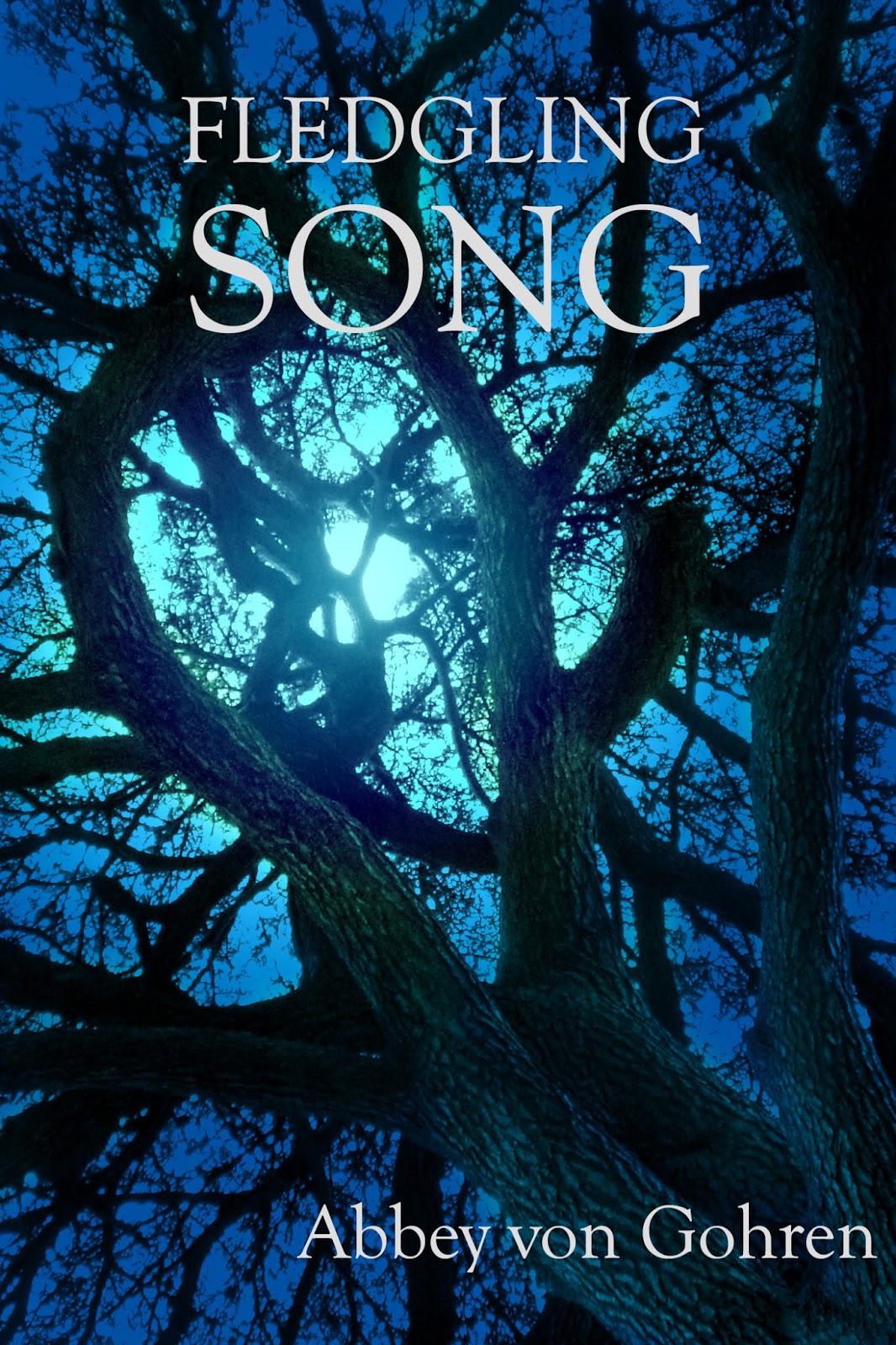
Addendum: I was struck by a very obvious fact upon re-reading this post. Birds are also the central metaphor in my book, Fledgling Song and would give me the opportunity to do a shameless plug for it. : ) You can find my novella here on Electio Publishing and here on Amazon if you've never read it before. If you have read it and have an opinion, please write a review on Amazon and help me tell the world. Spread the word! 


Tuesday, March 11, 2014

A Curious Sound


In C.S. Lewis' The Lion, the Witch, and the Wardrobe, a young boy named Edmund trudges miserably through the woods which have been frozen in always-winter-yet-never-Christmas by the White Witch's power. He, too, has been under her spell. But as he plods in servitude under the imperious eye of his mistress and her cruel dwarf's whip, he hears something that breaks through the monotony.

"There...seemed to be a curious noise all round them, but the noise of their driving and jolting and the dwarf's shouting at the reindeer prevented Edmund from hearing what it was, until suddenly the sledge stuck so fast that it wouldn't go on at all. When that happened there was a moment's silence. And in that silence Edmund could at last listen to the other noise properly. A strange, sweet, rustling, chattering noise - and yet not so strange, for he'd heard it before - if only he could remember where!" Then all at once he did remember. It was the noise of running water. All round them though out of sight, there were streams, chattering, murmuring, bubbling, splashing and even (in the distance) roaring. And his heart gave a great leap (though he hardly knew why) when he realised that the frost was over."

This is one of the first great signs - not only of spring in Narnia, but also of the melting of icy hearts like Edmund's - or, like ours. We may not even recognize the noise of running water if it's been a very long time, but if it sweet to us even in its strangeness - this is the first hint that there's hope. Our heart gives a great leap, though we may not quite know why. Life is awakening from slumber deep down under year-laden layers of snow, and we sense things moving in spite of our still-heavy eyes. 


We were woken early from the literal winter-slumber this year quite suddenly. Several weeks ago, we threw a few things in a suitcase, dragged it laboriously through the snow and ice (this was before Minnesota's spell was broken), and hopped on a bus, a train, a plane - to another place. It was rather Narnia-like, stepping through a door into another world. I have never quite gotten over the magic of plane travel.

Our destination was the sunlit lands of San Diego. We arrived in the cool of evening, but the mere fact of being able to stand outdoors comfortably at the airport and watch palms gently giving in to light breezes - this was a revelation. Our shoulders, long hunched from chilliness, relaxed. Our faces felt the humidity and rejoiced. This was going to be good.


The next day, we were whisked to a little place in southern California called La Jolla,  stunning with its varied sea life, craggy coves, and vistas. The sunset by the end of the day was breathtaking, but the best part was that we spent most of our day inside of that landscape. We learned how to balance a paddle-board and then followed a friend over two miles out to sea into pods of dolphins, whiskery sea lions, bright garibaldi fish, and shadowy groups of leopard sharks shifting below. We decided that Sea World just might be a little bit of a let-down after all of that.

Despite the unfamiliarity of San Diego (what is that thing glinting in the sky - oh! Is that the sun?), we were greeted many times by the familiar faces of old friends. Here we were, in surroundings that were bright and and novel - but we were with dear people who have many times generously hosted us, broke bread with us, shared beauty with us, and provided us with much-needed rest and play. Here was a home where lemons grew in the backyard. Where I laid out silverware on the patio table for lunches. Where one could lay around and read, sleep, talk, cook, or - if so inclined - run out the back door, and straight onto a mountain.


One was so inclined. Winding suburban streets suddenly gave way to a gravel trail, which became "Black Mountain Trail" and I was off, ocean visible far in the distance. As a climbed higher and higher, I ran out of breath more easily, but I felt pushed on by something else - what was it? It was a curious feeling, one I hadn't felt in a while. It was energetic desire, leaping up like Edmund's curiosity, reminding me of beauty and the love of running and how fine God's creation looks when you open your eyes to it.


At that point, since it had been about a day since we'd been to the beach, so it was of course time to return. We basked in the incomparable luxury of time; walking the length of a beach while the sun slipped down, near a little town called Cardiff-on-the-Sea. This was the site of another sweet reunion and renewal of friendship. Good company, good food, good local wine. Just good. So much good. The sands were golden - almost too bright for our eyes.


Speaking of the bright, there is a certain savage beauty to the winter where we live, in the “tundra” as we call it with semi-fond chagrin. (Some of us more fondly than others, I recognize!) Having always been a lover of snow, ski, brisk, bright white-lovely days, I never have had the typical wintertime fly-me-to-a-beach reflex. It always felt a little bit like cheating myself out of seasons. However, this long year's trudge through frozen windshield wipers and frigid strings of subzero weeks wearied me in its sameness. It's always winter and only once Christmas (so long ago!). The monotone days were difficult to surmount.


This is perhaps why our adventure felt almost miraculous. The word that we could not stop using was "blessed." Every single day was a yes, an amen - even the rainy ones near the end were this way, full to the brim of glory, fun, and shimmer. Each experience was an opening of our eyes, ears, mouths, and hearts to another reality - of the warmed side of God's green earth. We may have been in a long season of waiting, but things are beginning to melt here back at home, too. The roar of San Diego's ocean waves still echo in my ears like a seashell, but I'm also starting to hear it underneath Minneapolis' lakes and rivers. I don't think it's my imagination. The spell is beginning to break, and my heart is on the verge of a great big leap...

Wednesday, December 04, 2013

Advent Thoughts, Hope


"This is the day that the Lord has made."

What day?

Obviously, this particular day, made up of 24 hours. Or for the Romans, 12 horae. Or however else we want to divide the light we've been given. Every bit of it has been fashioned by the Creator, the one who said let there be Light, and divided the light from the darkness, and called the light day. Speaking of the Romans, their night hours were divided into 4 vigiliae, which means watches (like vigilant). That's quite telling! Day is so desirable that the night hours are spent watching for it. The students I have the privilege of teaching just read the tragedies of Aeschylus, which begin with a watchman waiting for the light of morning as for a beacon. And in Psalm 118, the poet waits for the Lord “more than the watchman waits for the morning, more than the watchman waits for the morning." It's almost like he repeats this to himself in order to keep his grainy eyes squinting despite his weariness. 

Whether you're a night owl or whether you really do love mornings, there is a deep longing in all of us for light, for the sun. We feel it especially acutely these winter days, when the sun lays itself down rest in the afternoon, and is shy to rise again in the morning. We are of the day, this day of the Lord! Let us live like it, awake to the stunning realities all around us, whether it's the curve of a parabola, the turn of phrase in a fine story, or the quiet kindnesses of a fellow human.


I remember singing a song in Sunday school as a little person: “This is the day, this is the day, etc." Very perky. I sang it with gusto – both at church and at home. Maybe a little too loud too early in the morning for my brother and my mom, who needed more time before they were ready for my screechy voice, however exuberant. And as I yelled it at the top of my lungs, I was looking out the window, addressing that particular day – whether it was pouring rain, floating snow, or bursting with sun rays –declaring that THIS is the day! This one, right? Thursday December 5? 

Yes. But I don't think that's only it. Just this week, while reading Psalm 118, I had a realization that knocked me back into my chair. The day we live in is oh so much bigger than Thursday, Dec. 5. Check this out: 

The stone that the builders rejected
 has become the cornerstone.
This is the Lord's doing;
 it is marvelous in our eyes.
This is the day that the Lord has made; 
let us rejoice and be glad in it. (Psalm 118:22-24)

The stone that the builders rejected as a cornerstone, a prophecy about Christ. He came down from heaven in the form of a vulnerable little baby and from the very first was rejected by humans who were apparently trying to building something else. Despite all, despite death, he became the main stone that sets the foundation. Who did it? Certainly those builders had nothing to do with it; we had nothing to do with it. The Psalmist tells us: “this is the Lord's doing.” We can marvel at it, like the Psalmist, like the shepherds, like the Wise Men, but we certainly didn't bring it about. Our calling is to marvel and rejoice at what He's done for us.


Then do you see it? 


What if “the Lord's doing” and “the Day He's made” are one and the same? What if Christ becoming Christmas for us (and Good Friday and Easter and our King Coming) - what if it is all a Great Big Day we live in and breathe deep and have our true being? 

I think this is going to change how I live, if I manage to let it sink in. When I awake to my alarm next morning, I will not only bow my head and thank him for the breakfast of this particular day – but maybe I'll remember this Great Big Day, too, the one made up of Christmas, Good Friday, Easter, and the hope of His Coming again all rolled into one.


My eyes catch on the verse on the church bulletin: "First Sunday of Advent. The Spirit and the Bride say come." 

Yes! Come and relieve your watchmen. Satisfy our aching hope. 


Saturday, November 30, 2013

Hungry Eyes, Hungry Mind

A tired pile of student quizzes lies haphazard, halfway read on the desk in front of me. I yawn large and the back of my head touches the headrest of my too-comfortable chair. Though I am surrounded by colleagues, I lose consciousness for a moment, and start back into awakeness, unaware whether it's been five minutes or fifty. The third cup of coffee did not have the effect I had hoped; it is time for more drastic measures. Make it bright, dazzling, and cold.


In one dramatic swoop, I leap up and grab my coat with the hope that the bright, stinging cold of the outdoors will revive me. As it happens, it does - but not only this. Rather, it awakens of the eyes of my heart, goads me to beauty-hunger again. It takes just a taste of it, and my appetite is back again to raging. The framing of a single leaf by the white winter rays. A pussy willow stalk, half consumed by swirling autumn winds brings to my mind the other day- when all the air was downy with their shedding summer coat in the park. It had been like a warm autumn snowstorm, flurrying over the marshlands of Loring Park. Oh, how I wish I would take the long way home more often.


The swelling on one plant looks familiar, but I cannot recall why exactly. I see it, and the impression on my mind is that there must be a bug inside somehow. Why do I think this? A bit of knowledge planted long ago, as it happens - like the grub of the gallfly, who plants his seeds deep in this plant and lets it swell in reponse. I pull up a chair next to a fellow teacher after my brisk, brief adventure outdoors and he reminds me of the story. Yes, this is a goldenrod plant, that's what I had recalled. I get new details, too. Apparently, the larvae of the gallfly  secretes a substance which functions almost like a localized steroid, creating the abnormal growth that we see. He also takes advantage of the warmer autumn days to dig a tunnel of escape for the springtime through the bulge - a backdoor, since he'll be too sleepy and weak come next spring. Finally, he releases an antifreeze substance from his body, which insulates his winter home. Wouldn't that be something - if we could skip the Home Depot trip and just open our mouth and shoot out window insulation film over our windows?


We ended up dissecting it on my desk and found the grub (which unfortunately arrested the fly's life cycle, but helped my own along). It had already dug a tunnel through almost to the outside, but not quite breaking through. We marveled at the spongy, corky structure, the thought, the design so intricate.

Sometimes you just have to push aside the piles of paper that you think are necessary in order to doing something immediate and beautiful.

And then the bell rang. And I was hungry again.


Tuesday, October 29, 2013

Burning Bushes

Everywhere I walk these days, the trees have burst into varicolored flame. Tiny tongues of fire lick up everything from humble turnpikes to generous stretches of river valley. The blaze reaches to the sky; sometimes an austere grey canvas, sometimes a dizzying, robin-egg blue. In the aftermath, we are surrounded by the embers, and the nose catches the musky scent of smoke devouring the annual sacrifice spiraling down. Soon the odor will be hushed by winter's chilly blanket, but for now the picture is still poignant and sharp.

A burning bush is a sign, a happening, a conversation with God himself. It means shedding your shoes in awestruck wow, being thankful for the beauty of the earth. This experience usually catches us by surprise, interrupts us, and we must let it. On Mount Horeb, Moses is preoccupied with the daily work of caring for his father-in-law's flocks when he notices the burning bush. He says to himself, "I've got to see why this bush is not burned up, though it is in flame." Then, after he turns aside to look, he hears the Lord speaking to him. It's like those words in the hymnal:

For the joy of ear and eye
For the heart and brain's delight,
For the mystic harmony
Sinking sense to sound and sight ("For The Beauty of the Earth", 1864). 


This is actually quite extraordinary if you stop to think about it. How is it that Something flashes and leaps through the gate of the eye, crashes through to the mind and makes the Image on the retina mean something, sinking it down to the level of sense? Not only that, it opens up the other senses, like hearing, tasting, smelling, touch - maybe a host of other sensations yet undiscovered. Could it be that Imagination is simply responding, much like Moses did to the burning bush? That is, turning aside from routine, following a curiosity, humbly shedding shoes, and finally - maybe - hearing from God Himself?


Because I am a writer, I spend a good deal of my time grouping words into images in order to have an impact. The stakes are pretty high. I wait for tongues of fire - to speak truth in as many languages as possible. How else am I to get people to turn off from the normal path? If I want to arrest my reader, it could very well be with a common thing - a shrub or a house or a spoon or a  library - but to make it worth leaving the task at hand, it must be "on fire" somehow. Not only that, a further miracle must occur. That a tree would burn is plausible. That a burning tree is not consumed is impossible. It is that leap from the everyday to the miraculous that I want to effect for those who read my writings, and that is no small feat.


There is another possibility in art, and that is to let the bush burn to the ground. Afterwards, you deal with the ash and aftermath. It may be that something may rise, Phoenix-like, but it must be utterly lost before it can be found again. This is beauty in the midst of devastation. The German artist Anselm Kiefer gives us a glimpse of this approach, with his massive, post-apocalyptic projects that build with remains of the manmade world.

The recent documentary by Sophie Fiennes which features his work is entitled "Over Your Cities Grass Will Grow" (2010), which is Kiefer's paraphrase of a verse from Isaiah. In the passage to which he refers, we see the city after the Day of Judgment. The people are left with crumbling ruins where "thorns will overrun her citadels, nettles and brambles her strongholds" and birds and jackals run wild over the tumbled stones. It's a desperate picture, one that resounds with the human condition in many respects, and one that Kiefer seems to insist upon in his work. Another example is his re-imagining of libraries (maybe the ancient one at Alexandria, burned down according to legend) as a massive, leaden bookshelf overcast with gloom and ashen hues. Maybe he is attempting to bring substance to a lost thing. Some of his leaden books literally have wings attached. Is this tragic or hopeful? Or both?


Maybe the test of a well-wrought image is whether it burns up with the consuming. And the test of a culture is what it does in the wake of the disaster. Are we capable of recognizing good images in the vast, charred morass of media and cultural production? Vigen Guroian, an ethicist, has suggested that we are in a crisis of imagination, and that this is a deeply moral problem. I tend to agree with him. As he explains: "The moral imagination is...the very process by which the self makes metaphors out of images given my experience and then employs these metaphors to find and suppose moral correspondences in experience." (24, Tending the Heart of Virtue). This is not a simplistic matter of right and wrong, not initially. It begins with a failure to see, to delight, to understand - but the consequences are far-reaching.

Please. Let us look for the beauty. Yes, this world is scattered with emptied images that invite us to grieve. But it is also full-to-bursting with blazing branches that refuse to be consumed. It is time we took off our shoes and listened.

Monday, September 30, 2013

All Of It Was Music

 The night was bending in a grin 
 As streetlight shadows tattooed skin 
 Whatever we were tangled in
 All of it was music.


This longtime love of mine, Over the Rhine, drove into Minneapolis this weekend. They opened their guitar cases and their mouths wide and cried out an anthem to faithful presence. All the livelong night. They ran their fingers along fretboards and traced the lines of the map they had traveled all these years. I've been along for part of that.

Since my dear friend introduced them to me in high school, I have been hooked. Once, the two of us drove eight bleary-eyed hours down to Cornerstone Music Festival just to take in their show. Another time, my man and I happened to be in Seattle when they filled a little club in the Ballard neighborhood with people and...themselves. In-between the sightings, their lyrics have provided proof-texts for my own life experience. Generous-hearted artistry and faithfulness seem to go hand in hand. Hallelujah.

As it happened, there was great deal of music to be had this weekend in my hometown. Speaking of faithful presence, the husband had his dance card full with practice, rehearsal, and a show. So, I struck out on the town to find my fortunes with friends new and old. The result was treasure.


First, I gathered with the faculty at school to listen and learn about the music of Arvo Pärt. I had heard his name in passing before, and it had always had a magical quality to it, like if I chose to put myself under that spell someday, it would be very, very good. I was not disappointed. A longtime friend and colleague skillfully led us through Pärt's music and ideas, especially the concept of "tintinabullation." The composer coined this word to describe his work that includes:  bell-like sounds, meaningful repetition, and an anchoring in deeper musical theory. (Like centering around the triad and home chord, for those of you so inclined.) When it came to the hearing, I was floored. Here was a "minimalist" composer that I could get behind. There was a warmth and humanness to his sounds that was intensely attractive in a way that others (such as John Cage and Phillip Glass) have never achieved for me, personally. My ears and mind were still ringing with his music when I  wandered over the Cedar Cultural Center to catch Over the Rhine playing. Which. was. lovely.


The next evening, I was very fortunate to visit the Dakota Jazz Club, again, thanks to a friend. (This is becoming a theme, it seems.) The great Dave Holland was playing with his Prism project (Craig Taborn, Kevin Eubanks, Eric Harland), which is a jazz fusion sort-of thing. Much like the Pärt, I mentally prepared myself for a musical "workout," as in I thought that it would be very good - but kind of difficult to take into my ears and have my brain process it. And, like my previous experience, nothing could have been further from the truth. The music drew me in with its nervous excitement and joyous stretches of notes. What's more, Dave came over after the show and chatted with our table about what jazz means. "Improvisation is listening," he said. Also, he suggested that a person's character dictates how they will play: a generous man will play that way; a selfish man will play accordingly. That is, jazz, with its fluidity between form and freedom, provides a forum for the playing-out of personality. Finally, the advice he received once from another famous musician as a young man, "play it all." Don't limit yourself to a certain style that you happen to take a shining to right now. Play it all. 


For example, what do you do when you find wild pears in the neighborhood park? You play it all. You try something new and outside of your vocabulary. To that end, several weeks of ripening and painstaking hours of labor later, the juice is set up as must for future cider. Not to mention the fifty-some pints of wild grape jelly brought in from riverbanks and suburban side yards a few short weeks ago. All of that bounty just keeps on comin', and we are trying to put it all up somewhere. All of it, music.

Or when the unwinding summer leaves you with a dry dusty warmth and hankering for cooler winds, you go out into it. You catch the last yellow rays of the day and the flow of blue riverstream. It's all etched in the driftwood cast up on shore, and you sit for a minute. With a brother, a lover, a friend. Play it all, to the last note.

As I write this, there is still music rumbling the floorboards of our home and I hope that never changes. Tonight, the Boom Boom Room* is a thumpin' in the lower regions, preparing for their imminent appearance on the surface of the Twin Cities music scene. In contrast, last week at this time, it was all mandolin and ringing voices as we enjoyed an impromptu confluence of food, friends, musical instruments and wine.

Regardless, all of it. Music.

*More information here.


Monday, September 02, 2013

Be Blessed, You Dear God-Created World


"Alyosha stood gazing and suddenly, as if he had been cut down, threw himself to the earth. He did not know why he was embracing it, he did not try to understand why he longed so irresistibly to kiss it, to kiss all of it, but he was kissing it, weeping, sobbing, and watering it with his tears, and he vowed ecstatically to love it, to love it unto ages of ages"(362).

At this early moment in The Brothers Karamazov by Fyodor Dostoevsky, the young Alyosha is overcome with a love yet to be defined. For many years, he had been living in a monastery and studying under Father Zosima, an ancient known for his mystery, wisdom, and extraordinary love of people.  However, as his beloved teacher fades from this world and prepares for the next, he tells Alyosha that the thrust of his life will soon carry him out of the little community and into the great outside, to "sojourn in the world".

The young man is very unsure of this path at first, and struggles to understand why it must be so. Finally, one day at the vigil surrounding Father Zosima's coffin, Alyosha has a vision of the dead man rising and coming over to speak with him one last time, encouraging him once more: "Begin, my dear, begin, my meek one to do your work!" The young man is filled with wonder and runs outside to the starry dome of a sky, thrusting his head into it and marveling.

It is at this point that he falls to the earth and embraces it, sobbing, vowing, loving. He finally surrenders to the shape of his life as God would have it. "It was as if threads from all those innumerable worlds of God all came together in his soul, and it was trembling all over, touching other worlds...some sort of idea, as it were, was coming to reign in his mind."

He saw it all, in a sudden flash - and it changed him forever. He saw how life was made of the intricate interweavings of the great cumulus-inhabited expanses above, the clouds of dust beneath, and all the life that man's breath can breathe in-between. By stretching out his hands and grasping the earth with the love that had grown in him for years, he could embrace the ugly, the pain, the beauty, the suffering - and thereby aid in its transformation into the kingdom of God. Three days later, he leaves the monastery.

I wonder, do I have that kind of courage? Do I lay hold of it all, letting my hands be pierced through by the thorns while my nose takes in the winey scent of the bloom?


Another place where I have glimpsed this vision of love for the world is in the life of Dietrich Bonhoeffer, through the new biography by Eric Mexatas, Bonhoeffer: Pastor, Martyr, Prophet, Spy and also a collection of Bonhoeffer's writings and thoughts, Meditating on the Word. As a young man at college and seminary, Bonhoeffer showed an intellectual brilliance and steadfastness to principles that impressed both liberal and conservative theologians alike. Several famous German seminary professors courted him with the hope that he would work under them. His family, historically aristocratic on all sides, encouraged his career as it seemed to lead toward promise of recognition in university circles (even if he had picked religion of all things  - this in a family of doctors and lawyers).

He walked this path for a time, distinguishing himself in the city among greats such as Karl Barth and the venerable Adolf von Harnack. His course of study required several appointments as a pastor (usually seen as a tedious necessity to young theology students), but young Bonhoeffer was attracted to this hands-on, practical working-out of his ideas on the church. Increasingly, he devoted his time to organizing much-needed Bible studies for young people, visiting the old and sick, and crafting stunning sermons that would draw the minds and hearts of his congregants toward God. He did not really abandon his studies, but rather the desire to make them official and institutionalized slowly drained away. His energies were directed more and more to the people who were outside the towering walls of the university.

I should be clear about this. Bonhoeffer never stopped learning and thinking, not even after he was imprisoned by the Nazis. His personal reading lists and output in the form of writing was prodigious, especially during his imprisonment, but there was a distinct shift. He wanted it to serve the world, to love it. Even when that world turned on him and many other righteous persons, as it did under the Third Reich. In a letter from Tegel Prison to his best friend Eberhard Bethge, he wrote the following, first explaining the way in which Christ had been "in the world":

"The answer of the righteous person to the sufferings which the world causes her is to bless. That was the answer of God to the world which nailed Christ to the cross: blessing. God does not repay like with like, and neither should the righteous person. No condemning, no railing, but blessing. The world would have no hope if this were not so."

He then goes on to explain the Christian's role in the world's redemption:

"The world lives and has its future by means of the blessing of God and the righteous person. Blessing means laying one's hands upon something and saying: You belong to God in spite of all. It is in this way that we respond to the world which causes us such suffering. We do not forsake it, cast it out, despise or condemn it. Instead, we recall it to God, we give it hope, we lay our hands upon it and say: God's blessing come upon you; may God renew you; be blessed, you dear God-created world, for you belong to your creator and redeemer. The renewal of the world, which seems so impossible, becomes possible in the blessing of God."(Meditating on the Word, 99-100, emphasis mine).

This was from the pen of a man who would be murdered by Nazi soldiers not one year later. Like his Saviour, he "loved them to the end," even his traitors.

I find myself at a beginning. I am not sure what it all means. Like Alyosha and Bonhoeffer, it will be defined as I step forward into it. What I do know is that it has something love, the world, suffering, and beauty. My refrain for the sojourn: "Be blessed, you dear God-created world."

Friday, August 23, 2013

Let's Have Some Love

I will be back again soon with a proper post about life, the universe and everything, but this is a simple appeal for some feedback on my novella, Fledgling Song (2013). If you've read it, please consider posting a review on Amazon or Goodreads or Barnes & Noble. (Or all three!) It is a fact that we live in an age when things are evaluated rather simplistically: thumbs up/thumbs down, five stars, or the ultimate limitation - just "LIKE". However, this is the language of our time - online at least - and if you would be so kind to speak up honestly and truly about what you thought, that would be very helpful!

To that end, I am sending the first ten people who write a review a free, signed copy of the book. So, let's have some love!

Monday, August 12, 2013

Pull in the Bounty

There are times when you rock back on your heels and think, wow. Look at the feast about me, so much good. And it's easy to see. Plenty of other times, things send you falling back full on your rear end, and you're thinking the opposite. At least at first. But you still end up saying, wow. And maybe even (if you are open to it): look at the feast about me. The psalm-poet wrote that his God "prepares a table before me in the presence of my enemies." And that sort of feast, in the midst of fast, is particular. Love is sharper and more poignant and pierces deep.

But these days, we are surely pulling in the bounty. My "five and country senses" are insufficient to take in the harvest. Like a poet said, "the five eyes break". They almost ache, they are so overladen with good. The other night was such a moment, felt in the half-light by dirt-encrusted fingers. After a back-bending day of hard labor pulling roots, weeds, snapping and cracking the dead wood, we paused. Above our heads, an apple tree heavy with early fruit. Below, the already-windfalls gave off a sharp cider smell. We stood beneath, expectant. There would soon be rain, the crackle of electricity in the darkening air. Shake it. Again. Just send a few more down, pound the ground with a shimmy up the trunk and a jostle. Watch your head! One smacks me on the back and I laugh. On the way home, the car smells of apples and the rainwater slaps the windshield like more fruit falling. I think, good. The gardens will rejoice themselves. We rejoice ourselves.

Another evening, I feast on sounds. They are everywhere, flowing in and around this home that I love. On the front stoop with half of a cigar and a book of essays by Marilynne Robinson, a jazz record giving its final contented crackle just inside the open window. And then- not silence, but something very like it. The click of a june bug in the light above my head, a cricket grating away on the front door, a faint train hallooing its reedy warning, kids down the block cackling, the wind cool in the trees when all else calms down. It was a concerted effort of the here and now to be full and complete and good. What an extraordinary thing in the already-not-yet world in which we live - that I might be present at such a gathering. 

May I be more present at such gatherings. 

The savoring of days through our mouths and tastebuds is bountiful above and beyond. It's astounding, really, when you tear up roots almost forgotten, and you find they've swollen beyond recognition, ready to eat. Last time you looked, they were seeds then maybe leaves. Have you ever had beets with fresh mint? Hardly a meal we assemble at home lacks at least something from the modest plots outside. Tomatoes, green beans, beets, radishes, crabapples, mulberries, juneberries, chard, zucchini, greens, bright yellow squash, and herbs of every savor.


I wonder. How long have we waited for this place without knowing it? Here, our home. It is a place where the creativity can spill out into all of the nooks and crannies, becoming a wildflower garden, a painted wall, a synthesizer line wafting up the stairs, a new sort of dish, an ingenious way to re-route rainwater, a collection of music next to the record player that turns and turns. We pull in the bounty of those turnings, those refashionings and renewings. We count now nine years between us and the black and white photograph. I like the French way of counting age - we have those years, they are a possession. We have seen many harvests -lean and plenty - and now we have a place where we can lay up our larder for a while. And I don't just mean beets and apples. Happy anniverary, happy home. 

Friday, August 09, 2013

Claire Meets her Mysterious Neighbor


She finished the last few hundred yards to the jardin, letting her fingers touch the rough spindles of the iron gate, painted over with more gleaming black to cover up the rust. She paused at the model of the small stegosaurus outside the Museum of Natual History adjacent to the garden. It always made her smile to see this ancient creature standing defiantly in the foreground of perfect rows of plane trees and manicured herb gardens– a funny mixture of scientific order and wild, unbridled eras of prehistory. Science really was a work of the imagination. This elevated Claire's spirits considerably, and she turned towards the length of the park stretched out before her, when a voice behind made her jump.

“How they thought up that creature from a pile of bones, beyond me.” Claire turned and saw her neighbor leaning on his cane, his gray beard pointing skeptically at the statue in front of both of them.

“Sir, you find it ridiculous?”

“In my time, we could identify each bone precisely within minutes with nothing more than a reference book, counting the occurrences in each square meter, measuring– the young folk these days with their computer simulations and what have you—they have no idea . . .”

“I love to count.”

“Eh? Oh well, good. Tant mieux.” Claire still could not place his accent, nor stifle her curiosity any longer.

“Sir, may I ask where you are from?

“Do you count bones, then?” he asked, ignoring her question.

“No...no, I am studying microbiology—er—specifically in the Camargue region.”

“Humph. What are you doing here?” Claire felt her cheeks getting warm with the incessant
queries—and the ambiguity of this last one. She had not been obliged to explain herself to anyone for months, and had rather forgotten how.

“Sir, I—”

“My name is Arthur—Art.”

“Okay . . . Art. I am doing a stage here at the Institut Pasteur.”

“Oh, well. That’s good enough, I guess.” Claire meant to hide her disappointment at his dismissive
tone, but must have failed, for he cocked an eye in her direction from under his ever-impressive brow, and added, “I suppose you like that, then?” Like it. Well, yes. She turned in the direction of the stately building and opened her mouth to respond, but he interrupted her again: “I walk past those doors every day—part of my morning constitutional.”

“Why?” Her little word seemed rather bare and inquisitive, like a sharp scalpel, but it was too late to draw it back.

“Habit. I used to work across the garden, here.” Art turned slowly on his heel, poked with his cane at the chalky sand, and shifted his weight. “But now I’m the dinosaur.” He guffawed loudly, immensely enjoying the joke at his own expense. Claire smiled politely but dared no more. After his shoulders stopped shaking in leftover laughter, he nodded to her as if they were simply passing in the street, and continued his stroll across the shadow lines of the bare, leafless trees. He never had mentioned where he had come from, or where he was going. 


That evening, she ran a dull peeler over a few tired, rubbery carrots, hoping to revive them in yet another bowl of couscous. He’s worked in my lab? He walks past every day! How could this be the first time I’ve seen him? Claire shivered. Maybe he was the ghost of some former, misunderstood biologist, nervously floating through the gardens and halls, still vying for a long-lost peer review of a research paper. But seriously. She and Art had lived not eight feet apart for four months, only rarely crossing paths, never once exchanging words. Now, he kept appearing out of nowhere and thoroughly haunted her thoughts. She set the water to boil and grabbed her notebook, anxious to record the course of events, to better understand them, to give bodies to the phantoms wandering in and out of her brain...

***

An excerpt from my novella, Fledgling Song (2013). © Abbey von Gohren

Available now in paperback and ebook at: Electio Publishing, Amazon, Barnes & Noble. 


Tuesday, July 30, 2013

Release of Fledgling Song

I am overjoyed to announce the official release of my novella, Fledgling Song (2013, Electio Publishing).


Fledgling Song traces the thought life and wanderings of Claire Sivert, a young Canadian woman living and studying biology in France. Caught between the wilderness landscapes of her native Manitoba and the winter-gray cityscapes of Paris, she struggles to find a firm footing. Besides yearning for a sense of place, she is also caught between two eras of her life. Painfully vivid memories from her childhood and tentative hopes rooted in the present intermingle as she moves through her days and records her musings in her faithful journal. Full of wonder and yet delicately unsure of herself, Claire learns through several encounters with new friends how to be bold and face her past and present, however imperfect.

A perfect end-of-summer read! 

Available at electiopublishing.com in paperback and ebook and amazon.com. 

Sunday, July 28, 2013

Let Us Name


It has been a longtime favorite thought of mine that poetic language is, by definition, naming things properly. I have alluded to this idea previously in conjunction with my own sense of calling on the Fling, and many other thinkers have dwelt on it and enriched my own understanding as well over the years. Adam's work as the first poet is implied, for example, in Bob Dylan's "Man Gave Names to All the Animals." The song ultimately demonstrates that our choice of words can have drastic implications. It begins with the typical Dylan, off-the-cuff whimsy:

He saw an animal up on a hill
Chewing up so much grass 'til she was filled
He saw milk comin' out but he didn't know how
"Aw, think I'll call it a cow"


However, the last stanza ends abruptly - and, more importantly, nameless.

He saw an animal as smooth as glass
Slithering his way through the grass
Saw him disappear by a tree near a lake...

We, after the fall, are left to finish the sadly obvious, the unsaid, the deadly. There has got to be some crucial relation between the thing itself and the thing we call it. If one is able to correctly use words (either spoken or written) to evoke and reflect an experience and it can be very good, then might improperly wielding words have the opposite effect? Or what are the consequences of simply failing to name correctly, as in Dylan's depiction of Adam, who retires in shamefaced silence? If only he had shouted "SNAKE!" to Eve in time...

At the end of last semester, I toiled through Ralph Waldo Emerson's essay "The Poet" in the faculty room with a few other teachers. I say it was hard work because he obviously had some Very Large Pronouncements to make, being Emerson, but the most tantalizing tidbits were deeply rooted in large sections of dense prose. Such as, "the poet is the Namer, or Language-maker, naming things sometimes after their appearance, sometimes after their essence, and giving to every one its own name and not another's, thereby rejoicing the intellect, which rejoices in detachment or boundary." Whew. I get it, but wow. (There were plenty I didn't.) Or, "language is the archives of history...language is fossil poetry." This is what sometimes happens when poets try to write literary theory - opacity and metaphors galore. But the fact that it is "rejoicing to the intellect" to delineate here but not there is a gorgeous and true thought. And the fact that we humans do this with our words is even more stunning. It reminds me of that stirring passage in Job where God is re-telling how he created the waters, when he informs them in no uncertain terms :"This far you may come and no further, here is where your proud waves halt." Who is this, that even the winds and the waves obey Him? And yet, if we are to have dominion as His children and heirs, do we not engage in a similar activity? We point at things, perhaps tremblingly, and say: "After this preposition, and before this noun - this is where your proud waves halt."


All of this has been fresh in my mind this past week as I ground my way through the arduous task of naming and re-naming my book. As it happens, "working" titles can be dangerous. You just might find yourself a week before the publication date thinking to yourself: Hm. That's not it at all.  I read today that Gone With the Wind was originally entitled Mules in Horses' Harnesses. This gave me hope, but not until after the four or five days I spent sweating over the same set of a dozen words or so, arranging and re-arranging to find just the right fit. Thanks to a happy confluence of brainstorming friends and a one a.m. ah-ha moment which got me out of bed and back to the yellow legal pad, I think we've got it. Fledgling Song. I remember telling one of these very helpful friends that I was surprised at how much work it was to find a good name. If it was just the right thing, shouldn't it fall just into place? But no, apparently book titles can be a somewhat messy procedure.

As with naming anything, I suppose. Have you heard the nearly epic tales of parents who are trying to select a name for their child? I haven't been in this enviable position yet in my life, but if the book was any indication, it's going to be a long haul. It comes down to the fact that names do matter.  Proper names are only a subset of the larger human project of rightly naming all things, but it is the one that most people participate in over the course of their lives. You may never write a poem (though I hope you do), but you will probably name a child if you haven't already. The enormity of our responsibility as Namers is brought home to us in a myriad ways, but "baby names" are one of the most common, frustrating, and endearing ones.

But how about the discovery of an unknown sea creature? Or a new planetary moon? Or new facets of our own genetic code that we once thought to be non-essential and now calls for a nobler term than "junk DNA"? Or the feeling that you got that one time that made you gulp down your tears, because you had nothing to call it?

The frontiers lay in vast swaths in front of us. Let us, therefore, name.